Elevate Your Culinary Expertise by Perfecting Knife Sharpness
What Essential Elements Determine the Optimal Sharpness of Your Knife?
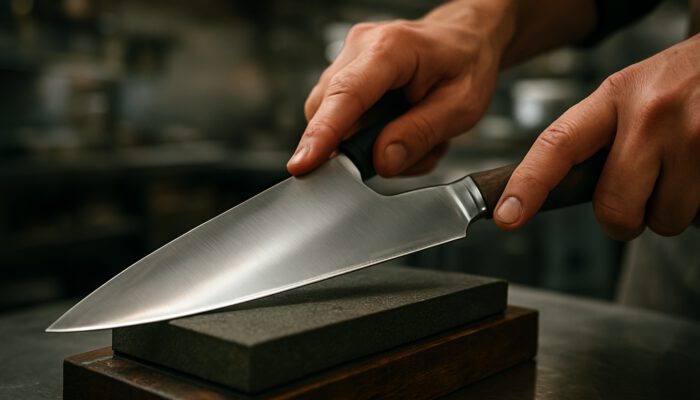
A knife reaches its peak sharpness when its edge geometry is intricately designed to provide exceptional cutting performance, while the quality of the blade material is crucial for maintaining that sharp edge over time. The sharpening angle is a significant consideration; for example, a typical chef’s knife generally has an angle between 15 and 20 degrees, allowing for precise and clean slicing. Observing real-world applications in professional kitchens demonstrates how regular use can lead to microchips and dulling of the blade over time. To effectively address this wear and tear, consistent sharpening practices are essential, as they help preserve the knife’s cutting efficiency during everyday culinary tasks.
The choice of materials used in knife production has a profound effect on its sharpness. High-carbon steel blades are often preferred in culinary settings because of their remarkable capacity to achieve and hold a sharp edge much longer than stainless steel alternatives. However, it is worth noting that these blades require extra care to prevent rusting. Understanding the intricate relationship between edge geometry and material quality is essential for anyone seeking to elevate their knife skills and overall culinary prowess.
What Core Practices Ensure Effective Maintenance of Your Knife Blades?
Routine inspection and meticulous cleaning form the bedrock of effective knife maintenance, as these practices not only prevent dulling but also extend the lifespan of your knives. A critical technique involves honing the blade at the appropriate angle, which can vary based on the specific type of knife. For instance, Asian-style knives typically necessitate a sharper angle compared to their Western counterparts. Equally significant is the application of consistent pressure during honing, which ensures that the blade retains its intended edge profile, thus promoting optimal performance.
Proper storage of knives is another crucial aspect of effective blade maintenance. Utilizing solutions such as magnetic strips or knife blocks dramatically reduces the likelihood of nicks and damage that often arise from improper storage methods. By incorporating these maintenance techniques into your routine, you can significantly enhance the durability and safety of your knives, transforming them into indispensable tools for achieving culinary excellence.
What Indicators Reveal That Your Knife Requires Sharpening?
Several telltale signs can indicate that your knife is in need of sharpening. The most evident sign is a noticeable decline in cutting effectiveness; if a knife struggles to slice through vegetables or meat, it is undoubtedly time for sharpening. Visible nicks or chips along the blade’s edge can further compromise its functionality, and a lack of precision during tasks such as slicing or dicing reflects that your knife has dulled considerably.
A simple yet effective test involves attempting to slice through a piece of paper. If the knife drags or tears rather than slicing cleanly, it is a clear sign that sharpening is urgently required. Being able to identify these signs early will save you both time and effort in the kitchen, enabling you to keep your knives in prime condition for all your culinary endeavours.
What Proven Techniques Yield the Best Results in Knife Sharpening?
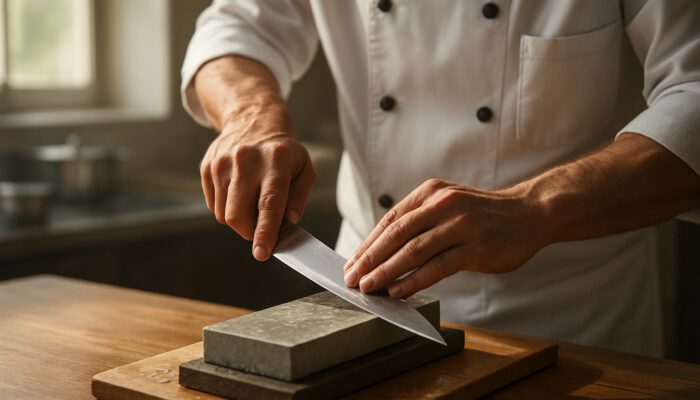
There are numerous effective techniques for sharpening knives, including the use of whetstones and pull-through sharpeners. The whetstone method is particularly favoured by professional chefs due to the precise control it provides over both the sharpening angle and the pressure applied. When employing a whetstone, it is crucial to maintain a consistent angle—typically around 15-20 degrees for most kitchen knives. A series of back-and-forth strokes, followed by honing the edge with a finer grit, will effectively restore the sharpness of the blade.
In Australian kitchens, recognising the importance of proper knife sharpening goes beyond functionality; it is also paramount for safety. A well-sharpened knife decreases the chances of slips and accidents during food preparation, especially when handling meats for the barbecue. For those who find the concept of whetstones daunting, pull-through sharpeners present a user-friendly alternative. These devices often feature pre-set angles, simplifying the sharpening process for beginners and helping them achieve satisfactory results without extensive training.
What Crucial Tools Are Needed for Effective Knife Sharpening?
Discover the Essential Equipment Required for Efficient Knife Sharpening
To sharpen knives effectively, possessing the appropriate tools is of utmost importance. Essential equipment comprises whetstones, sharpening steels, and guides, each serving a distinct purpose in the sharpening process. Whetstones are available in various grits, allowing for both coarse sharpening and fine honing. Typically crafted from natural or synthetic materials, these stones can produce a razor-sharp edge with enough practice and skill.
Sharpening steels, often misidentified as sharpeners, primarily serve to realign the blade’s edge rather than sharpening it. They are ideally used following each significant cutting session to maintain the integrity of the edge. Finally, guides can assist in preserving consistent angles while sharpening, making the process easier for novices. Together, these tools enhance accuracy and efficiency, leading to reliable results in knife care and maintenance.
How to Select the Ideal Sharpening Stone for Your Knives?
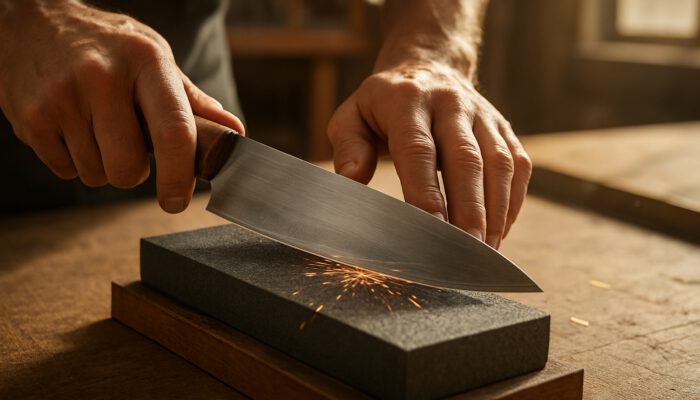
Choosing the right sharpening stone is essential for achieving optimal results. The grit level of a sharpening stone varies from coarse to fine; coarse stones excel at repairing damaged edges, while fine stones perfectly refine the edge for a razor-sharp finish. For most kitchen knives, it is advisable to utilise a combination of both grit types, starting with a coarse stone for shaping the edge and transitioning to a fine stone for honing.
Furthermore, consider the stone’s material. Synthetic stones are generally more durable and user-friendly compared to natural stones, which may require more maintenance. Understanding the specific requirements of your knives will guide you toward selecting a sharpening stone that enhances your sharpening experience, ensuring your blades remain in peak condition for all culinary applications.
What Helpful Accessories Should Beginners Consider for Knife Sharpening?
For those who are new to knife sharpening, certain accessories can significantly enhance the experience and assist in developing essential skills. Simple holders provide stability during the sharpening process, allowing users to maintain the correct angle with ease. These tools are particularly beneficial for novices, as they eliminate guesswork and help build muscle memory.
Another invaluable accessory is honing oil, which can be applied to the whetstone. This lubricant reduces friction and aids in maintaining the stone’s surface, resulting in a smoother sharpening experience. Lastly, a pair of cut-resistant gloves ensures safety while sharpening, allowing even novice users to handle their knives with confidence and minimise the risk of injury. By incorporating these accessories into your sharpening routine, you can achieve professional-grade outcomes over time.
What Innovative Sharpening Techniques Should You Explore?
Alternative sharpening methods, such as electric sharpeners and pull-through devices, are becoming increasingly popular due to their speed and simplicity. Electric sharpeners automate the sharpening process, typically featuring multiple stages that efficiently polish the blade. This approach is particularly advantageous for busy individuals who may not have the time to master traditional techniques. However, caution is advised regarding the quality of the sharpener, as some may remove excessive material from the blade.
Pull-through sharpeners also offer ease of use, with many designed to accommodate various blade types. Generally equipped with preset angles, these devices are accessible for novices while still delivering satisfactory results. By incorporating these options into your sharpening toolkit, you can effectively maintain your knife edges while reducing physical strain, ensuring that your knives remain reliable companions in the kitchen.
Gain In-Depth Knowledge on Advanced Sharpening Techniques
What Advanced Techniques Can Significantly Improve Edge Refinement?
For those eager to enhance their knife sharpening skills, advanced methods can dramatically elevate the process. One well-respected technique involves using progressive grits, which entails starting with a coarser grit to shape the edge and gradually transitioning to finer grits for a polished finish. This approach enables superior control and precision, ensuring that the blade retains its intended geometry throughout the sharpening process.
Additionally, employing a technique known as ‘stropping’ after sharpening can further refine the blade’s edge. This process involves drawing the blade across a leather strap, which polishes the edge and removes any microscopic burrs left from sharpening. The result is a knife that not only cuts effectively but also feels smooth in hand. Embracing these expert techniques can transform your knife sharpening routine into an artistic endeavour rather than a mundane task.
Why Is Proper Technique Crucial in Knife Sharpening?
The technique employed during sharpening significantly influences the longevity and safety of your knives. Subtle adjustments, such as the sharpening angle, pressure applied, and stroke speed, can yield professional results when executed correctly. For instance, applying excessive pressure might cause damage to the edge, resulting in a compromised blade profile that dulls rapidly.
Moreover, consistently practising proper techniques can help develop muscle memory, enabling quicker and more effective sharpening sessions. Emphasising technique not only enhances your skills but also fosters a safer kitchen environment, as well-maintained knives are less likely to slip or cause accidents during use.
How Can You Incorporate Professional Tips into Your Sharpening Routine?
Establishing habits around regular honing and sharpening is essential for maintaining optimal knife performance. Integrating professional tips into your routine can greatly enhance your culinary experience. For example, professional chefs often recommend honing knives after every major cutting session to keep the edge aligned and functional without the need for frequent sharpening.
Furthermore, developing a schedule for deep cleaning and sharpening can further ensure that your knives remain in excellent condition. By incorporating these strategies into your daily tasks, you will not only improve your knife skills but also instil a level of discipline that translates to greater efficiency in the kitchen. Real-world examples demonstrate that chefs who prioritise tool maintenance experience a smoother workflow and longer-lasting equipment.
What Common Mistakes Should You Avoid While Sharpening Your Knives?
Sharpening techniques can often be hindered by common mistakes that negatively impact performance and damage blades. Inconsistent angles during sharpening may produce uneven edges, rendering the knife less effective. Similarly, applying excessive pressure while sharpening can compromise the edge and may lead to premature wear of the blade. Recognising and avoiding these errors is essential for anyone looking to optimise their sharpening skills.
Experienced professionals advise taking your time and focusing on technique rather than rushing through the sharpening process. Regular self-assessment will help identify areas for improvement, ensuring that blades are properly maintained. By steering clear of these pitfalls, you will achieve optimal results and longevity, transforming your knives into trustworthy tools for culinary adventures.
How Does Proper Maintenance Contribute to Extending Knife Lifespan?
Continuous maintenance is vital for prolonging the lifespan of your knives, as proper storage and handling complement sharpening efforts. Storing knives in a manner that protects the edge is critical; employing magnetic strips or knife blocks can prevent nicks and corrosion. Additionally, regular cleaning and drying following each use will safeguard against rust and build-up that can dull edges over time.
Moreover, incorporating periodic honing into your routine will help maintain sharpness between sharpening sessions. Industry professionals recommend regularly examining the edge to ensure that any wear is addressed in a timely manner. Real-world case studies illustrate that kitchens prioritising maintenance practices enjoy significantly longer-lasting knives, ultimately saving on replacement costs while enhancing overall kitchen safety.
What Are the Critical Steps in the Knife Sharpening Process?
Follow This Detailed Guide to Master Basic Honing Techniques
To master the fundamental honing process, begin by inspecting the blade to identify any nicks or dullness that may necessitate attention. Next, set the appropriate angle—typically around 15-20 degrees for most kitchen knives. Maintaining a consistent stance and grip is crucial for preserving the desired angle throughout the honing procedure.
Then, glide the blade across the sharpening medium, whether using a whetstone or steel, while keeping the angle constant and applying even pressure. After making several strokes on one side, switch to the other side to ensure balance and uniformity. To test for sharpness, slice through a piece of paper or gently press the edge against your thumb; it should glide smoothly without resistance. This methodical approach guarantees a seamless workflow, leading to effective results in knife maintenance.
How Does Consistent Sharpening Influence Your Knives?
Regular sharpening can yield both positive and negative effects on knives, impacting their shape and longevity. While consistent sharpening aids in maintaining a sharp edge, excessive sharpening can alter the blade’s profile, resulting in a thinner or misaligned edge that may wear down more quickly. Striking a balance between the frequency of sharpening and careful technique is essential for preserving blade integrity.
- Loss of edge geometry leading to compromised cutting ability
- Increased risk of blade chipping or warping
- Potential for reduced overall durability of the knife
- Shorter intervals between necessary sharpening sessions
To maintain a knife’s edge while extending its life, focus on honing techniques that remove minimal material, ensuring you strike a balance between sharpening frequency and the longevity of the blade.
How to Tailor Your Sharpening Techniques for Different Knife Types?
Customising sharpening methods for various knife types is crucial for maximising their cutting capabilities. Chef’s knives, for example, require a sharper angle to achieve precise cuts, while utility blades may need less sharpness for more robust tasks. Understanding the design and purpose of each knife will guide your approach, guaranteeing effective sharpening and maintenance for each tool.
Additionally, certain knives, such as serrated blades, necessitate unique sharpening tools or methods, such as using a dedicated serrated knife sharpener. Adapting your sharpening techniques to meet the specific needs of each knife type enhances their performance and ensures they remain reliable tools in your kitchen arsenal.
What Optimal Practices Should You Follow for Knife Maintenance?
Daily Care Routines to Prolong the Lifespan of Your Knives
Implementing daily care routines is essential for enhancing the longevity of your knives. Proper washing and drying are fundamental initial steps; always hand-wash knives with mild soap and dry them promptly to prevent corrosion. Correctly storing knives in a magnetic strip or knife block minimises the risk of nicks and damage.
Moreover, regularly inspecting for signs of wear can help identify dullness early, allowing for timely honing before significant sharpening becomes necessary. Simple habits, such as using a cutting board made from softer materials like wood or plastic, can also minimise wear on the knife’s edge. By incorporating these daily practices, you will support the ongoing performance and reliability of your knives, making them indispensable tools in your cooking routine.
What Dangers Are Associated with Neglecting Knife Maintenance?
Failing to maintain knives properly can lead to a myriad of issues, primarily resulting in dull edges that complicate cutting tasks. A dull knife not only requires more effort to use but also presents safety risks, as the likelihood of slips and accidents increases considerably when users apply excessive force to cut through food items.
Furthermore, improper storage can result in blade damage, including nicks and rust, which can compromise the knife’s integrity over time. Regular checks and adherence to maintenance routines are crucial for ensuring reliable use and safety in the kitchen. Addressing these concerns early will save both time and money in the long run.
What Expert Strategies Ensure Long-term Knife Preservation?
Expert strategies for knife preservation focus on proper storage solutions and periodic honing. Store knives in a way that protects their edges, utilising magnetic strips, sheaths, or padded blocks. This approach prevents damage from contact with other utensils or surfaces, thereby extending the life of the blade.
Incorporating periodic honing into your routine—perhaps after every few uses—will help maintain sharpness and edge alignment without excessive material removal. Professionals frequently recommend establishing a schedule, ensuring that maintenance practices become an integral part of your cooking habits. By implementing these actionable steps, you will sustain edge quality over time, allowing your knives to perform at their best throughout their lifespan.
What Established Strategies Exist for Effective Knife Care?
How to Establish a Routine for Optimal Knife Care Results?
Establishing a routine for knife care is vital for achieving optimal outcomes. Incorporating regular honing and inspections into your daily tasks ensures that blades remain in prime condition. Setting aside a few minutes after cooking to hone your knife can dramatically improve its performance during your next meal preparation session.
Additionally, cultivate the habit of checking your knives for signs of wear before each use. This proactive approach helps prevent surprises while cooking, ensuring smooth and safe operations. By fostering these habits, you’ll develop a disciplined approach to knife maintenance, ultimately enhancing your efficiency and effectiveness in the kitchen.
How to Accurately Evaluate Knife Sharpness?
Effectively assessing knife sharpness can be accomplished through various methods. One common technique is the paper test, where the blade is drawn across a sheet of paper; a sharp knife should slice through effortlessly, while a dull knife will tear the paper instead. Another effective approach is the tomato test, which involves using the knife to slice through a ripe tomato; a sharp knife should glide through the skin with minimal pressure.
These testing methods provide immediate feedback on the blade’s condition, allowing for necessary adjustments before commencing food preparation. Regularly evaluating sharpness not only guarantees that your knives are ready for use but also reinforces good sharpening habits over time.
What Handling Practices Can Help Reduce Wear and Tear on Your Knives?
Proper handling of knives is essential for minimising wear and preserving sharpness. Gentle use is paramount; avoid cutting on hard surfaces, such as glass or stone, which can dull the blade rapidly. Instead, opt for wood or plastic cutting boards, which are gentler on the edge.
Moreover, always store knives securely to prevent unnecessary damage. Utilising sheaths or magnetic strips can safeguard the edges while ensuring easy access. By adhering to these best practices, you promote sustained sharpness, ensuring that your knives remain effective tools across all culinary applications.
Why Should You Investigate Professional Knife Sharpening Techniques?
What Advantages Are Associated with Precision Sharpening Techniques?
Utilising precision sharpening techniques offers numerous benefits that enhance both efficiency and safety in the kitchen. These methods yield superior edges compared to casual approaches, facilitating cleaner cuts and reducing effort during food preparation. A sharp knife glides effortlessly through ingredients, thereby improving the cooking experience and the overall presentation of dishes.
Furthermore, precision sharpening techniques tend to extend the life of the blade. Properly maintained knives require less frequent sharpening sessions, ultimately saving time and resources in the long run. Investing in mastering these techniques pays dividends through improved culinary performance and enhanced safety.
What Variables Influence the Success of Knife Sharpening?
Several factors play a crucial role in the success of knife sharpening. Consistency in angle maintenance is one of the most vital aspects; keeping the correct angle throughout the sharpening process ensures a uniform edge. Additionally, the pressure applied during sharpening significantly affects the outcome; excessive pressure can cause damage, whereas insufficient pressure may not yield effective sharpening. The quality of the sharpening tool employed also greatly influences results; high-quality whetstones and sharpeners deliver superior outcomes compared to lower-quality alternatives.
- Correct sharpening angle
- Consistent pressure applied
- Quality of sharpening tools
- Type of knife and blade material
By focusing on these key elements, you can significantly enhance your sharpening techniques and achieve professional results with relative ease.
What Long-term Benefits Are Gained from Expert Sharpening Practices?
Consistently applying expert sharpening practices yields long-term advantages, particularly regarding durability and performance. As professionals often observe, a well-maintained knife requires less frequent sharpening, saving time while preserving the blade’s material integrity. This ultimately results in a longer lifespan for the knife, reducing the need for replacements and ensuring a maximum return on investment.
Additionally, expert practices often enhance cutting efficiency, making food preparation faster and more enjoyable. Embracing these techniques fosters a deeper understanding of knife care, ultimately leading to a more rewarding culinary experience.
What Common Mistakes Should You Avoid While Sharpening Knives?
What Are the Consequences of Over-sharpening Your Knives?
Over-sharpening is a common mistake that can significantly compromise blades. Excessive honing may remove more material than necessary, resulting in a thinner edge that could jeopardise the knife’s integrity. This scenario can lead to a blade that dulls rapidly and requires more frequent sharpening, ultimately shortening its lifespan.
To mitigate this concern, focus on honing rather than excessive sharpening. Regular maintenance through honing will help sustain the edge without causing significant material loss, ensuring that your knives remain sharp and effective for extended periods.
How Does Uneven Pressure Influence Sharpening Results?
Applying uneven pressure during sharpening can lead to inconsistent edges, resulting in a knife that cuts poorly or unevenly. This inconsistency can create frustrating experiences in the kitchen, especially when precision is crucial for tasks such as slicing or dicing. Maintaining steady, even pressure throughout the sharpening process is vital for achieving a uniform edge.
To address this issue, practice focusing on a consistent technique and consider using guides or jigs to assist in controlling angle and pressure. Paying attention to these details will elevate the quality of your sharpening and overall knife performance.
What Simple Techniques Can Quickly Rectify Sharpening Mistakes?
Identifying and correcting errors in knife sharpening can be straightforward with practice. Start by carefully inspecting the blade for inconsistencies or signs of wear. If you detect any dull spots, return to your sharpening tool and adjust your technique, concentrating on the problematic area while maintaining your angle and pressure as you hone.
Additionally, using a fine-grit stone or honing steel can swiftly restore a dull edge without requiring intensive sharpening. This proactive approach ensures that your knives remain effective with minimal effort, facilitating smoother and safer culinary experiences.
What Are the Risks of Using an Incorrect Sharpening Angle?
Employing an incorrect angle during sharpening can result in a weak or ineffective edge on the knife. It is essential to adhere to the manufacturer’s recommended angle and maintain consistency for optimal outcomes. A common mistake is sharpening at too steep an angle, which can compromise the blade’s durability and performance.
Using the wrong angle can lead to frequent re-sharpening and potential blade damage, jeopardising both safety and longevity. Always research the appropriate angle for your specific knives and practice maintaining that angle during sharpening sessions to avoid these pitfalls.
Frequently Asked Questions Regarding Knife Sharpening
How Often Should I Sharpen My Knives for Optimal Performance?
The regular frequency of sharpening depends on usage patterns, but a general guideline is to sharpen your knives every 3-6 months for home cooks. More frequent use may necessitate sharpening every month or as needed based on performance observations.
What Is the Ideal Angle for Sharpening Kitchen Knives?
Most kitchen knives perform best with a sharpening angle between 15-20 degrees. Asian-style knives typically require a sharper angle, while Western-style knives may prefer a slightly wider angle to enhance durability.
Can I Use a Honing Steel Instead of a Whetstone for Sharpening?
Honing steels do not substitute for whetstones, as they primarily realign the edge rather than sharpen it. Regular honing can help maintain your knife’s sharpness between sharpening sessions with a whetstone.
Are Electric Sharpeners Suitable for All My Knives?
Electric sharpeners can be convenient and effective but may not be suitable for all knife types. Ensure you select a quality product and follow the manufacturer’s guidelines for optimal results.
What Distinguishes Sharpening from Honing?
Sharpening removes material to create a new edge, while honing realigns the existing edge. Both processes are essential for maintaining knife performance, but they serve distinct purposes in knife care.
How Can I Determine If My Knife Is Sharp Enough?
You can test knife sharpness by slicing through paper or a ripe tomato. A sharp knife should glide through without tearing or requiring excessive pressure, indicating a well-maintained edge.
What Should I Avoid When Sharpening My Knives?
Avoid applying excessive pressure, inconsistent angles, and sharpening on hard surfaces. These common mistakes can lead to poor results and damage your knives over time.
Can I Sharpen Ceramic Knives Using Traditional Methods?
Ceramic knives require special attention; use a diamond sharpening stone specifically designed for ceramic blades, as standard sharpening tools may not be effective for these materials.
What Is the Best Way to Store My Knives to Maintain Sharpness?
Store your knives on magnetic strips, in knife blocks, or in sheaths to protect the edges. Avoid overcrowding or loose storage that may cause nicks and damage to the blades.
Why Are My Knives Dulling Quickly, and How Can I Prevent This?
Knives may dull quickly due to improper storage, frequent use on hard surfaces, or inadequate maintenance. Ensure you follow appropriate care techniques to prolong the life of your blades.
Connect with us on Facebook today for more tips and community support!
The post How to Sharpen Knives Like a Pro: Essential Techniques appeared first on https://cookinggods.com
The Article Sharpen Knives Like a Pro: Essential Techniques Revealed Was Found On https://limitsofstrategy.com
The Article Sharpen Knives Like a Pro with These Essential Techniques found first on https://electroquench.com